Home cinema lighting with Worldlight
Home cinema lighting with Worldlight
At Worldlight we have experience illuminating home cinemas in luxury residences, and we know that a great home cinema is, above all, a matter of atmosphere.
Knowing how to choose the right type, place it correctly and control it according to the moment makes the difference between having a large screen at home and having a truly spectacular cinema room.
Lighting changes everything
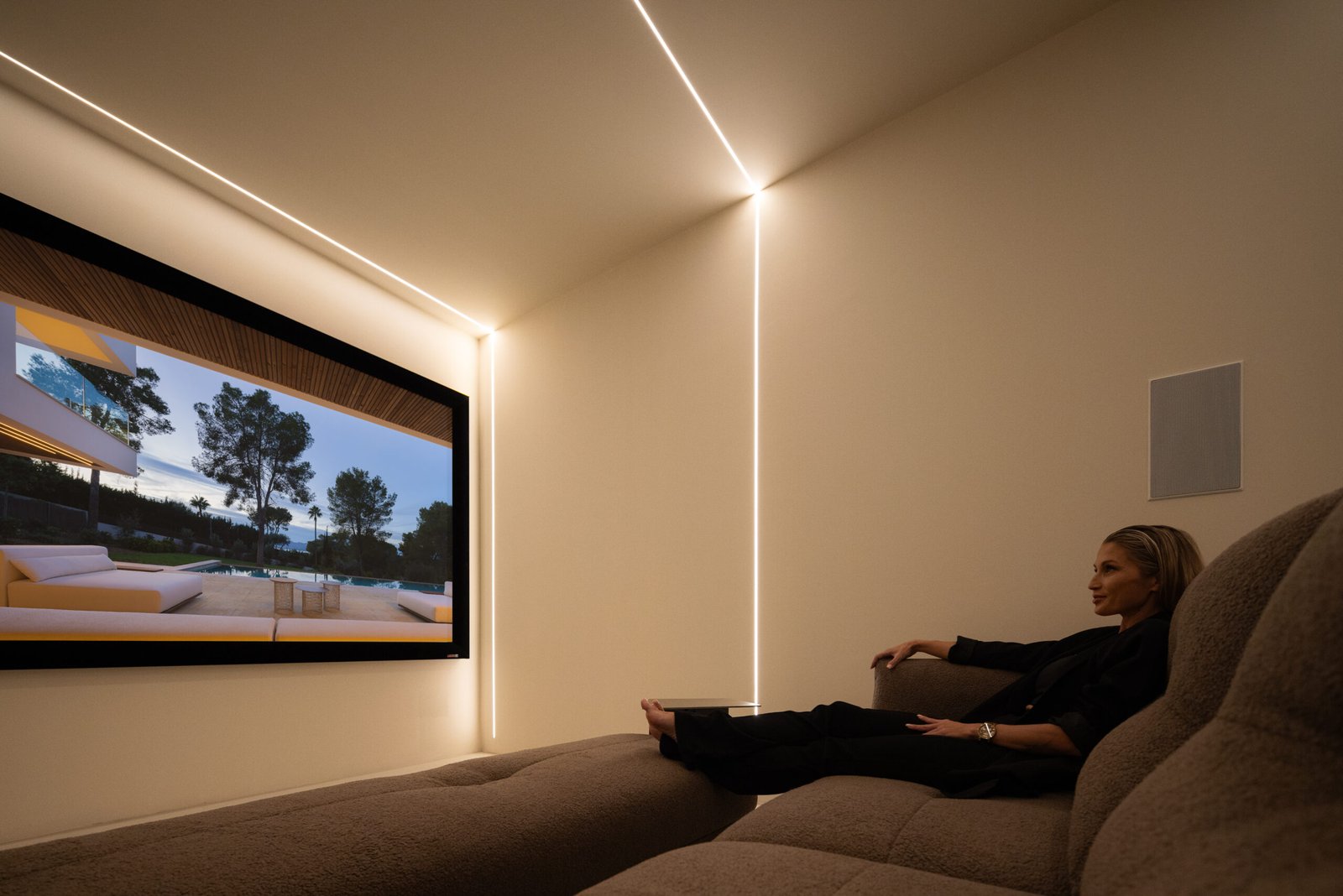
At home, what matters is replicating the atmosphere of a commercial cinema, which is why lighting is an important aspect to consider when designing a residence.
Poorly designed lighting can create reflections on the screen, visual fatigue and constant distraction. Well-designed lighting conditions the pupil, enhances perceived contrast and creates an emotional state that reinforces what is happening on screen.
The idea is not for the screen to illuminate the room, but for the room to prepare the eye to watch the screen, allowing it to adapt easily and without causing visual fatigue.
Perfect design structure
Every professional lighting project is structured in three layers. In a home cinema, each layer plays a different role depending on the moment of use.
- Ambient light. This is the main lighting in the room, so it should never be intense. Its function is to define the space when nothing is being projected, without competing with the screen.
- Accent light. It highlights architectural elements such as moldings, panels and cornices, creating depth and dimension without adding direct light to the space.
- Functional light. Ideal for the aisle between seats or the stairs, it should be directed toward the floor and kept very dim during projection.
Importance of technical design
Color temperature is measured in Kelvin and determines whether light is cool, neutral or warm. In a home cinema, this parameter matters because it directly influences how the colors of the projected image are perceived.
- 2700 K (very warm): ideal for rooms with dark tones and wood finishes. Does not interfere with the whites on screen.
- 3000 K (warm): the ideal point for most home cinemas. A balance between visual comfort and color accuracy.
- 4000 K (neutral): only recommended for access or technical areas, never near the screen.
- 5000 K or above (cool): generates visual tension and perceived desaturation in the projected image.
The general recommendation is to stay between 2700 K and 3000 K throughout the room for greater consistency across the entire space.
Specific solutions for every lighting point
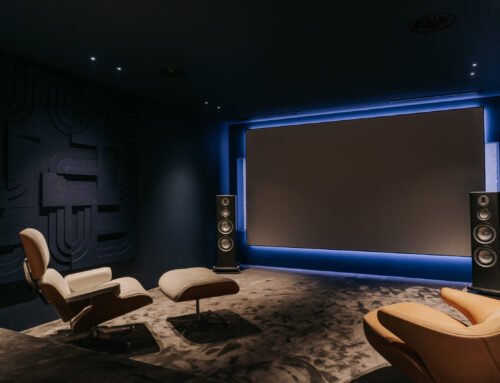
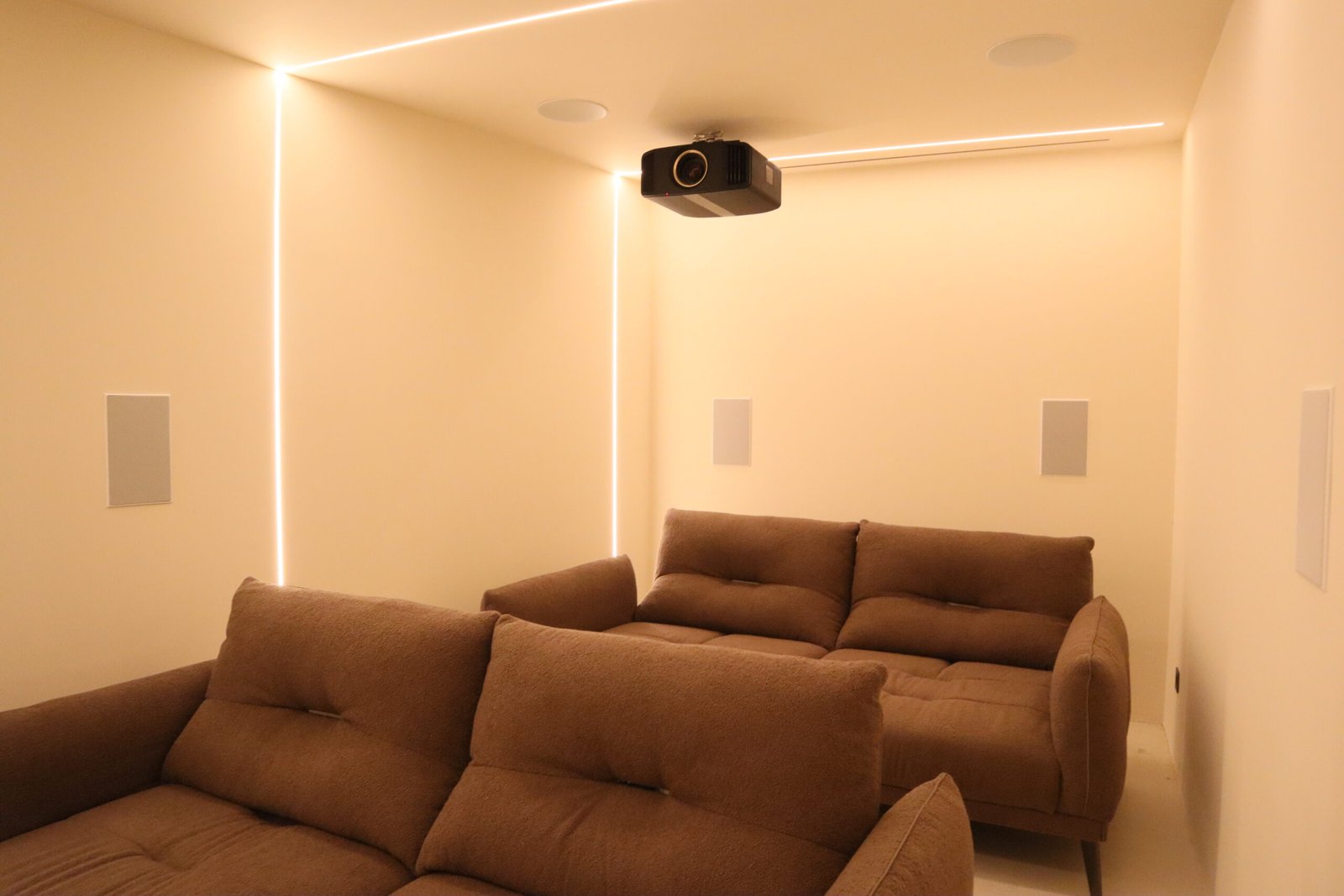
- Indirect lighting in cornice or ceiling cove. The most widely used technique in high-quality projects. It involves concealing LED strips in a perimeter cornice or a false ceiling so that light is projected upward or toward the wall, never reaching the viewer’s eyes directly.
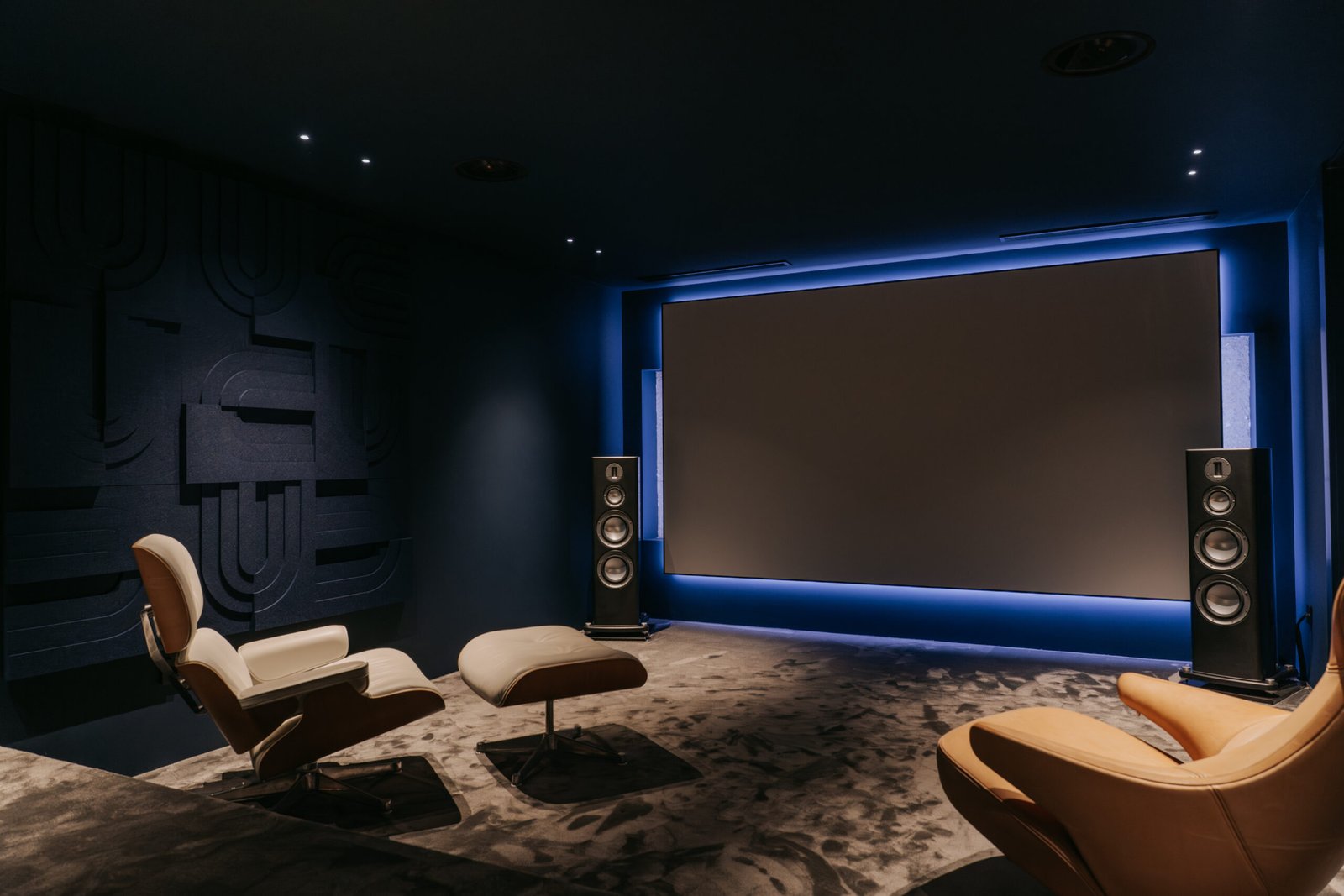
- LED behind the screen. Placing a low-intensity LED strip behind the screen frame, pointing toward the wall, reduces the contrast between the bright image and the dark background. This effect significantly reduces eye strain and is one of the best comfort investments you can make. The recommended color temperature for this use is 6500 K (D65 standard).
- Step and aisle guides. If the room has level changes or tiered seating rows, grazing LED lighting on the steps is essential. A recessed LED profile on the front of each step, pointing toward the floor, with no visible light source. It works during projection and ensures safety without disrupting the experience.
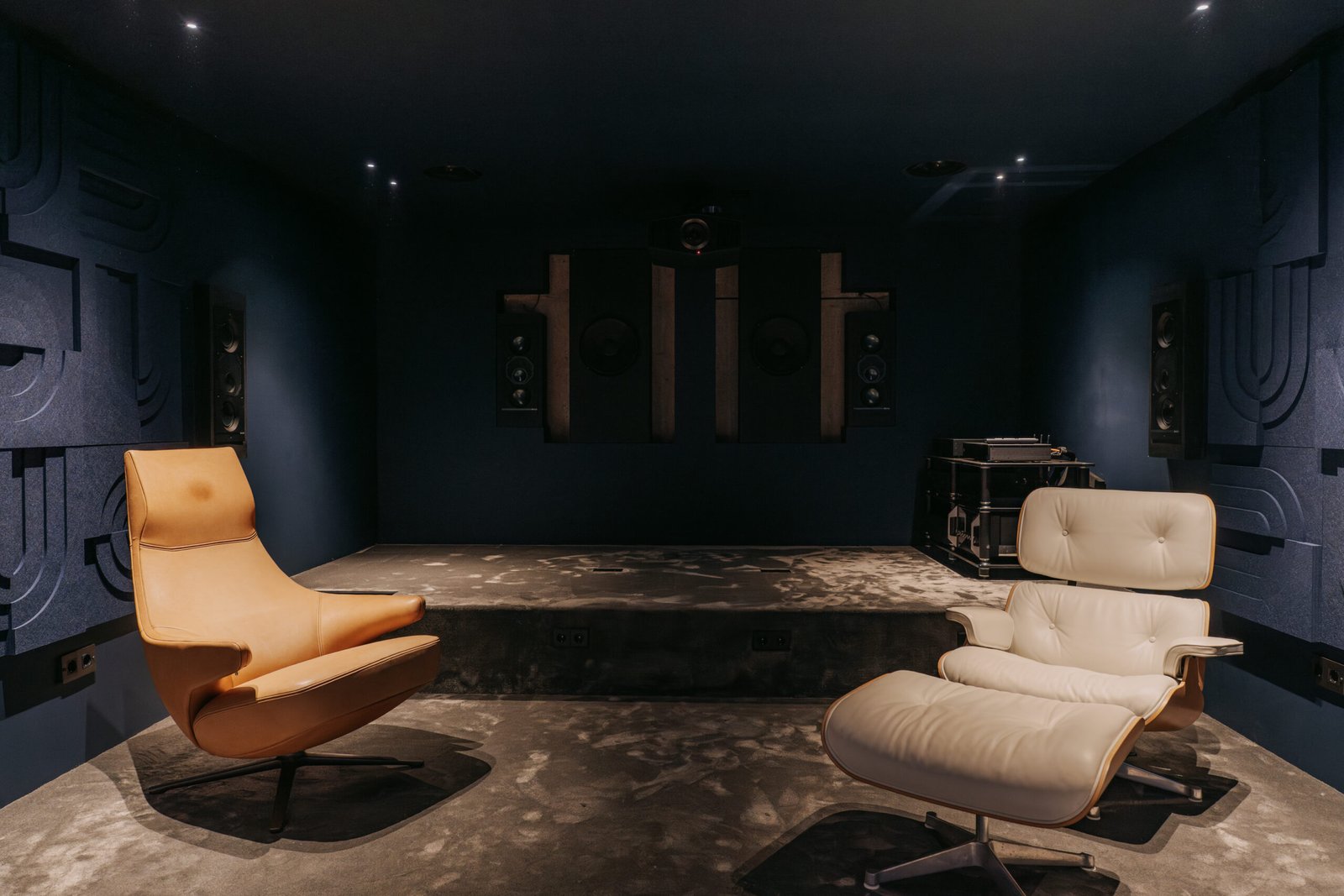
- Acoustic panels with integrated lighting. Increasingly common in high-end projects. Acoustic absorption panels are combined with LED backlighting, creating decorative elements that simultaneously treat sound and manage accent lighting.
Control in a Home cinema
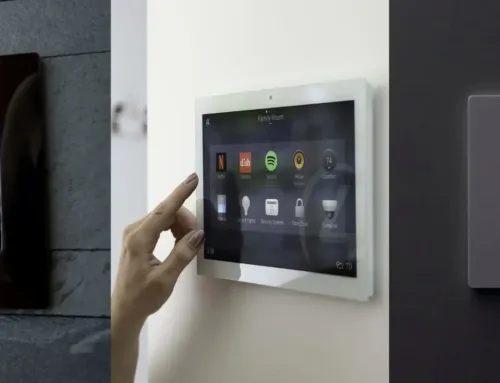
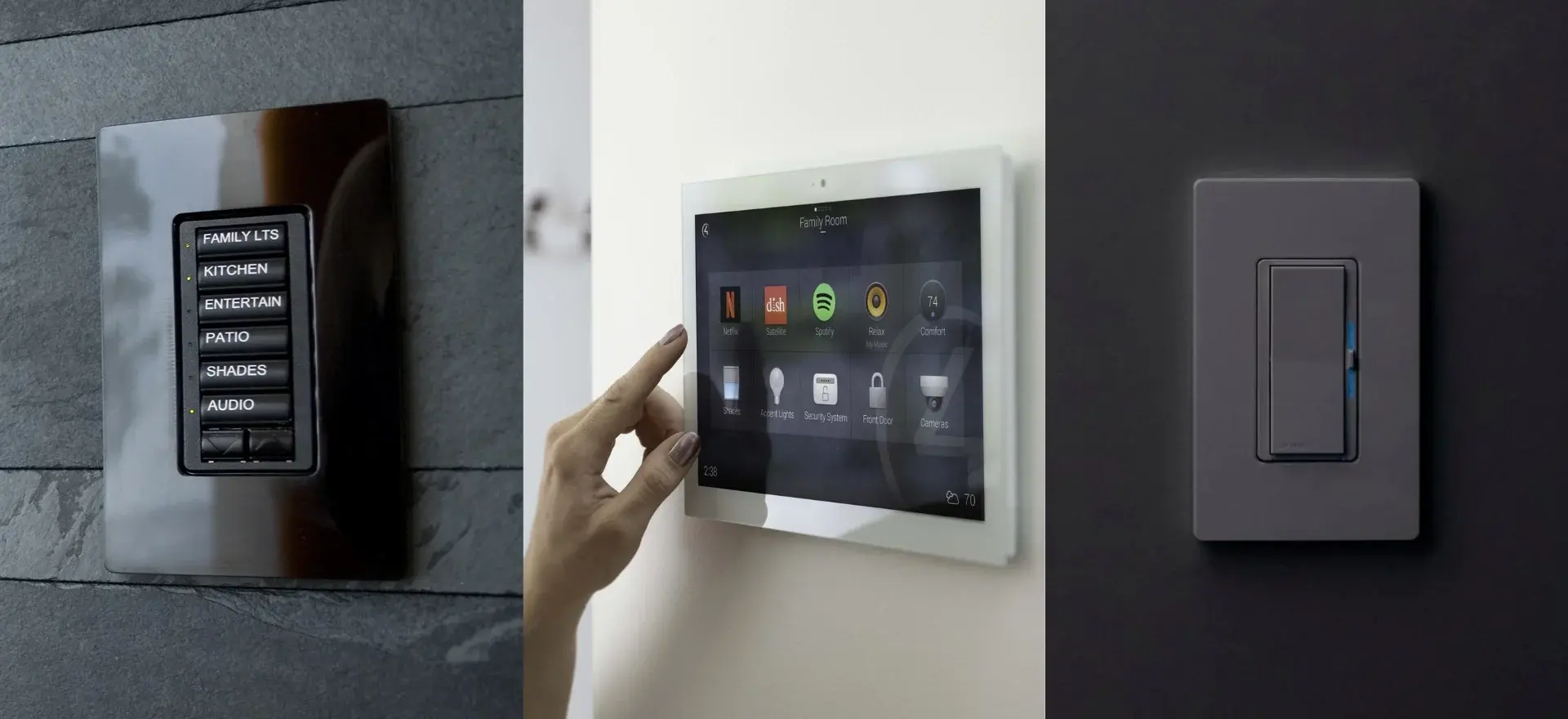
Home automation is a functional necessity that must be considered when designing and installing lighting. Systems such as Casambi, Lutron or KNX are ideal for this purpose.
- Programmed scenes: a single press activates movie mode: dimmer at 5%, floor guides on, bias light activated.
- Gradual dimming: the transition from normal light to complete darkness should last between 30 and 60 seconds, a detail that significantly improves the experience of entering the film.
- Projector compatibility: systems like Lutron or KNX allow the lights to be linked to the start of playback automatically.
- Control from the sofa: mobile app, dedicated physical remote or integration with the home cinema system controller.
If the budget does not allow for a full home automation system, installing independent dimmers per circuit is a very valid solution. It is not the same, but it is far better than a simple on/off switch.
Home cinema lighting with Worldlight
A well-designed lighting scheme in a home cinema is an investment that makes the difference between having a large screen at home and having a real cinema room, one built around wellbeing and visual comfort above all.
At Worldlight we accompany you throughout the entire process, from project creation to completion. We provide consultancy and supply of luminaires, and our team of experts is ready to help you at every stage.
If you want lighting that is thoughtfully designed and tailored to your space, do not hesitate to contact us.